US security agencies sent a new warning to airlines and airports just before Thanksgiving, asking aviation workers to stay alert during one of the busiest travel weeks of the year. The warning came after Al Qaeda supporters praised a recent attack on a plane and called for others like it.
The notice went out on November 19 to US commercial airlines, air cargo carriers and airports. It did not name a specific threat, and it did not change the rules for passengers. But it landed right as millions of Americans were heading to airports for the holiday, and it quickly became one of the most talked-about travel stories of the week.
So what did the warning actually say, and what does it mean if you are flying this weekend? Here is what we know so far.

Photo: US Department of Homeland Security, Wikimedia Commons (public domain) — A TSA security checkpoint in Atlanta, with a CT scanner and screening bins.
Why Did US Security Agencies Warn Airlines About Al Qaeda Threats?
The warning was sent by three agencies together: the Federal Bureau of Investigation, the Department of Homeland Security and the Transportation Security Administration. They sent what is called an informational report to airlines, cargo carriers and airports across the country.
The reason was a set of messages from Al Qaeda affiliates and their supporters. Those messages praised an attempted hijacking on September 30, when a first officer on a flydubai flight from Dubai to Tel Aviv attacked the captain in the cockpit with an emergency crash ax. The flight was carrying about 180 people. The messages called the attack a model for getting past security and urged supporters to carry out similar attacks against US, Israeli and Jewish targets.
What Did the Warning Actually Say?
The report asked aviation workers to watch for four warning signs. The first is people trying to avoid or get around security checks. The second is people asking for detailed information about flight operations or security with no good business reason.
The third sign is someone insisting on handling certain bags or cargo themselves, without help. The fourth is airline radios, employee badges or uniforms going missing without an explanation. The report said these signs matter most for people who work inside airports, because they have access to planes and secure areas.
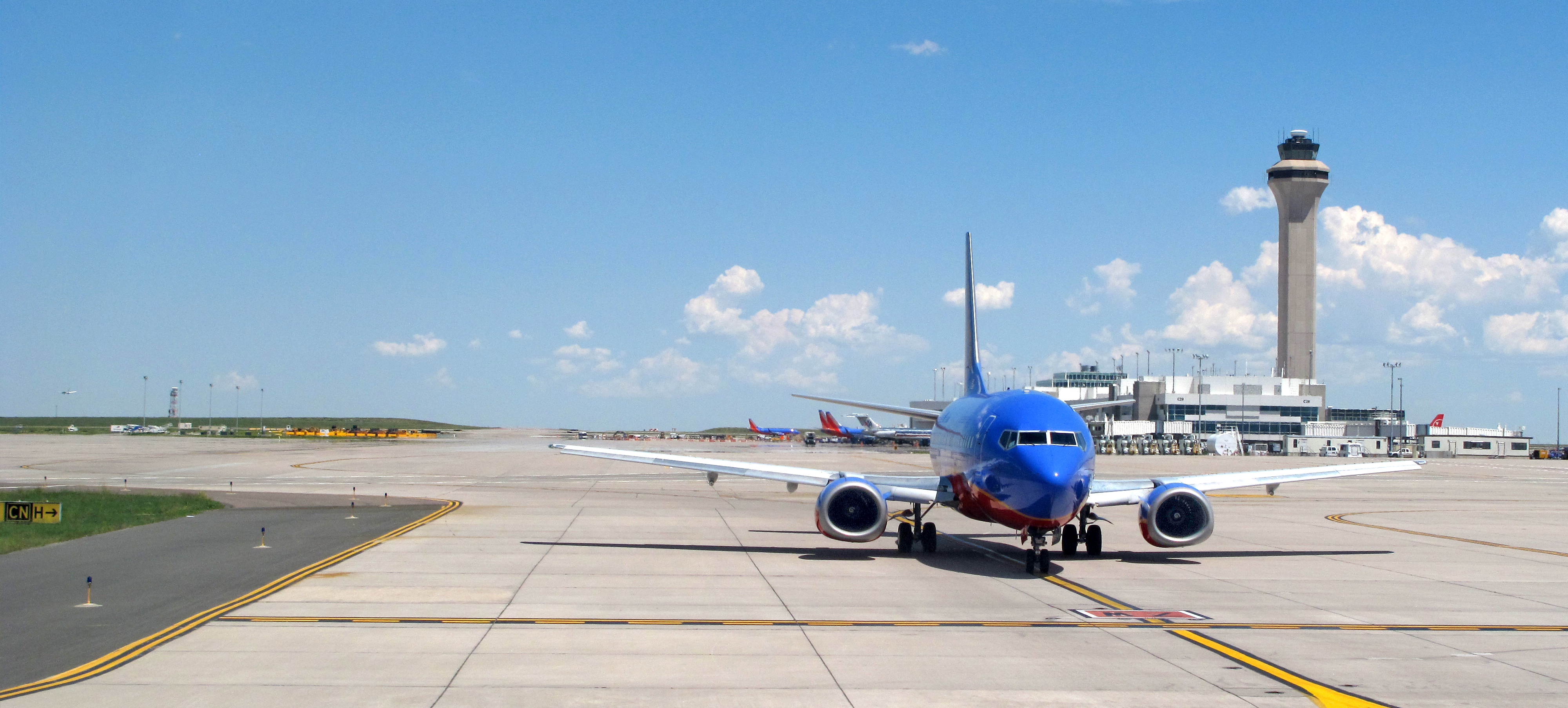
Photo: Downtowngal, Wikimedia Commons (CC BY-SA 3.0) — A plane on the runway at Denver International Airport.
What Does This Mean for Everyday Travelers?
The most important point is what the warning did not say. A law enforcement source said there are no known specific and credible threats underway. The government did not raise the threat level, and the Department of Homeland Security had no active public alerts as of November 24.
Nothing changed for passengers at the checkpoint. The TSA did not add new screening rules, and officials did not tell anyone to cancel or change their travel plans. The warning was aimed at the people who run airports and airlines, not at travelers in the security line.
Here are a few key points about the warning to keep in mind:
- The warning was sent on November 19, before the Thanksgiving travel rush.
- It named no specific airport, flight or date, and officials say there is no known specific threat.
- Passenger screening rules did not change, so travelers should follow the same steps as usual.

Photo: US Department of Homeland Security, Wikimedia Commons (public domain) — TSA officials at an airport checkpoint in Atlanta.
How Should You Handle Flying During the Thanksgiving Rush?
The timing is what makes this warning hard to miss. About 6 million people were expected to fly in the US between November 24 and November 30, and the TSA projected it would screen about 17.6 million travelers over that same period. Sunday, November 29, was expected to be the busiest day of all, with more than 3 million screenings.
The TSA's own holiday advice is simple: arrive at least two hours before a domestic flight and three hours before an international one, and allow extra time for parking, check-in and the security line. If you have a question about what you can bring, you can text AskTSA at 275-872.
If you see something that looks wrong at the airport, tell a TSA officer or airline worker. That is the whole point of the warning: many eyes, watching for small things that do not add up. The planes are still flying, the checkpoints are open, and the best thing most travelers can do is arrive early, stay calm and keep an eye out. Will this holiday weekend change how you think about airport security?
Comments
Post a Comment