NASA's twin ESCAPADE spacecraft are on their way to Mars, and they left us with a goodbye gift. On November 9, one of the probes turned its camera back toward home and took a photo of Earth from about 38,500 miles away. The picture shows our planet half in light and half in shadow, with one of the spacecraft's own solar panels in the foreground.
The photo was taken just three hours after the spacecraft's closest approach to Earth. It is a rare kind of picture: a spacecraft looking back at the planet it came from, on its way to another world. NASA released the image on November 23, and it quickly became one of the most shared space photos of the week.
The two spacecraft, nicknamed Blue and Gold, are now on a 10-month cruise to Mars. They are expected to arrive in orbit around the Red Planet in September 2027.
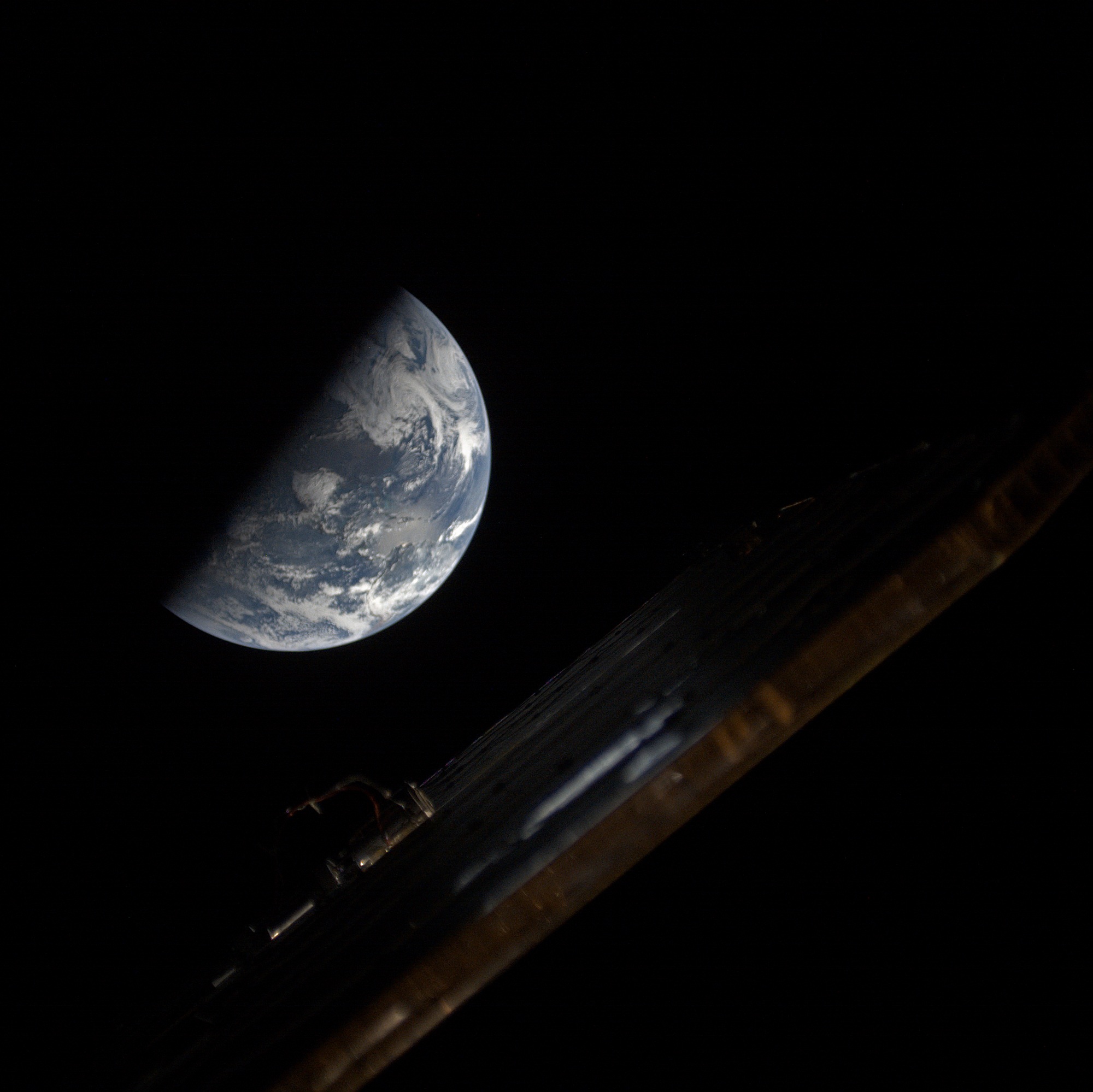
Photo: NASA / UC Berkeley / Northern Arizona University — One of NASA's ESCAPADE spacecraft captured this visible-light image of Earth from about 38,500 miles away on November 9, 2026, about three hours after its closest approach. One of the spacecraft's solar panels appears in the foreground.
Why Did the Spacecraft Fly Past Earth on the Way to Mars?
ESCAPADE stands for Escape and Plasma Acceleration and Dynamics Explorers. The mission consists of two identical spacecraft, each about the size of a household refrigerator. They launched together on November 13, 2025, from Cape Canaveral in Florida.
But they could not fly straight to Mars. At launch time, Earth and Mars were on opposite sides of the Sun, so the two craft waited for more than a year in a holding pattern near the Earth-Sun Lagrange point L2. When the transfer window finally opened, they came back toward Earth to pick up speed. Blue made its flyby on November 7, and Gold followed on November 9.
What Is an Oberth Manoeuvre, and Why Does It Matter?
The flyby was not a simple gravity slingshot. Each spacecraft fired its engines at the same time as it used Earth's gravity to change course. This combined move is called an Oberth manoeuvre, and it gives a spacecraft a bigger speed boost than gravity alone.
It is a well-known trick in spaceflight, but ESCAPADE's two craft are the first probes heading to Mars to carry one out around Earth. The burn was the key step that set them on their 10-month journey to the Red Planet. Without it, they would not have had enough speed to get there.
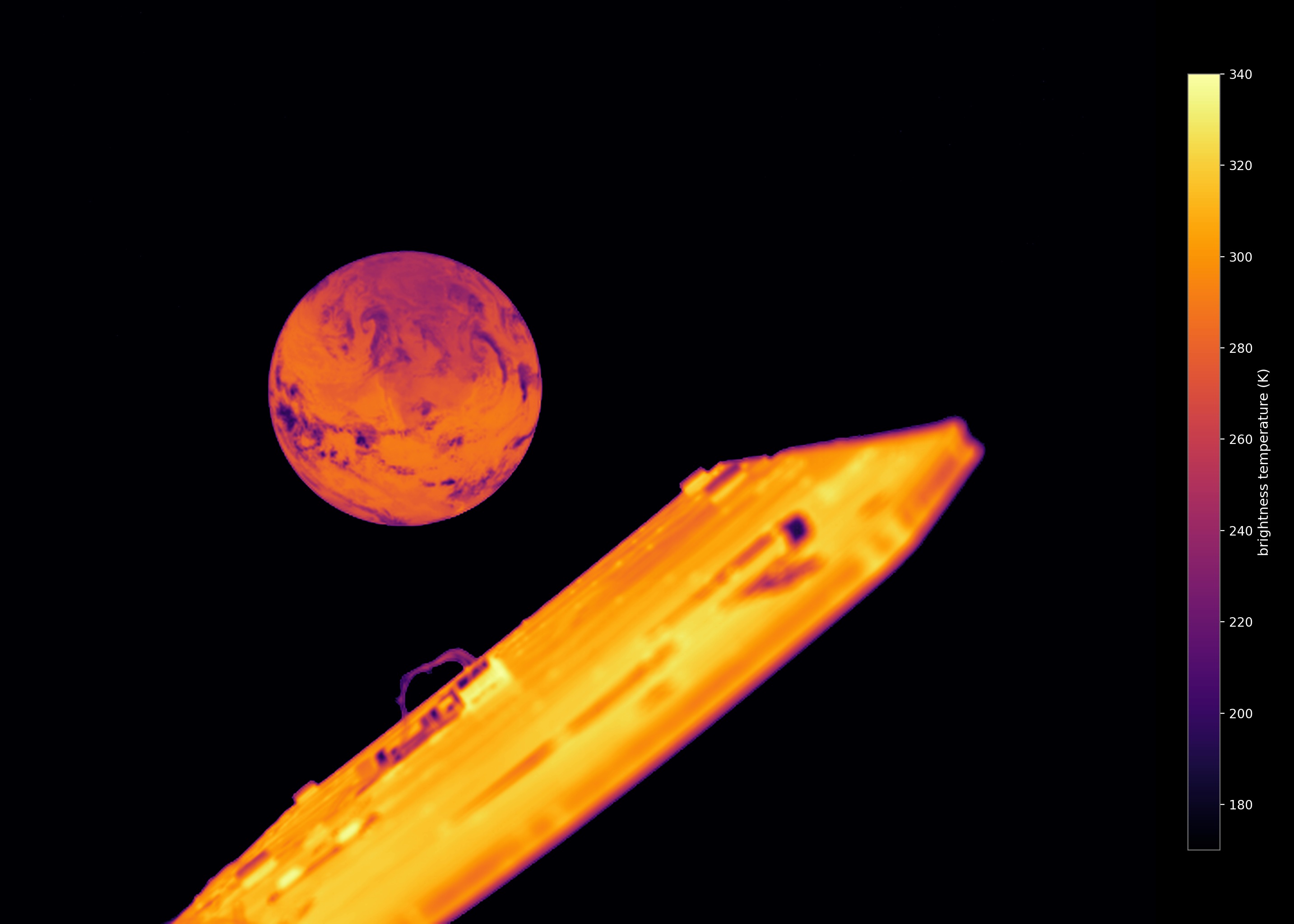
Photo: NASA / UC Berkeley / Northern Arizona University — A colorized infrared image of Earth captured by an ESCAPADE spacecraft on November 9, 2026. Warmer areas appear in white, yellow and orange, while cooler areas show up in blue and purple.
What Else Did the Spacecraft Photograph?
The visible-light photo was not the only image. The same camera, called the Visible and Infrared Observation System and built by Northern Arizona University, also captured Earth in infrared light. Infrared shows heat, not color, so warmer parts of the planet appear brighter than cooler ones.
NASA released several versions of the infrared image, including one colorized so that warm areas glow white, yellow and orange while cool areas turn blue and purple. The camera itself is modest by today's standards — just 5 megapixels — but it still produced a striking view of our home planet.
Here are a few key points about the flyby to keep in mind:
- The photos were taken from about 38,500 miles away — roughly six times closer than the Moon.
- Both spacecraft used a powered flyby, firing their engines while swinging past Earth, to gain the speed for Mars.
- While Gold photographed Earth, a commercial Vantor satellite photographed the spacecraft themselves from about 3,000 miles away.
What Happens Next for ESCAPADE?
The two spacecraft will spend about 10 months cruising to Mars, arriving in orbit in September 2027. Once there, they will first fly together on the same path for six months, then split into two different orbits for five more months.
Their job is to study how the solar wind — a stream of charged particles from the Sun moving at around a million miles per hour — interacts with Mars and strips away its atmosphere. That is a big clue to how Mars lost the thick air it once had, and why it became the dry world we see today. The mission is led by the University of California, Berkeley, and funded by NASA's Heliophysics Division.
For now, the farewell photo is a reminder of how far a small spacecraft can travel, and how small home looks from the road to another planet. When ESCAPADE reaches Mars next year, will its pictures of the Red Planet be just as stunning? We will have to wait and see.
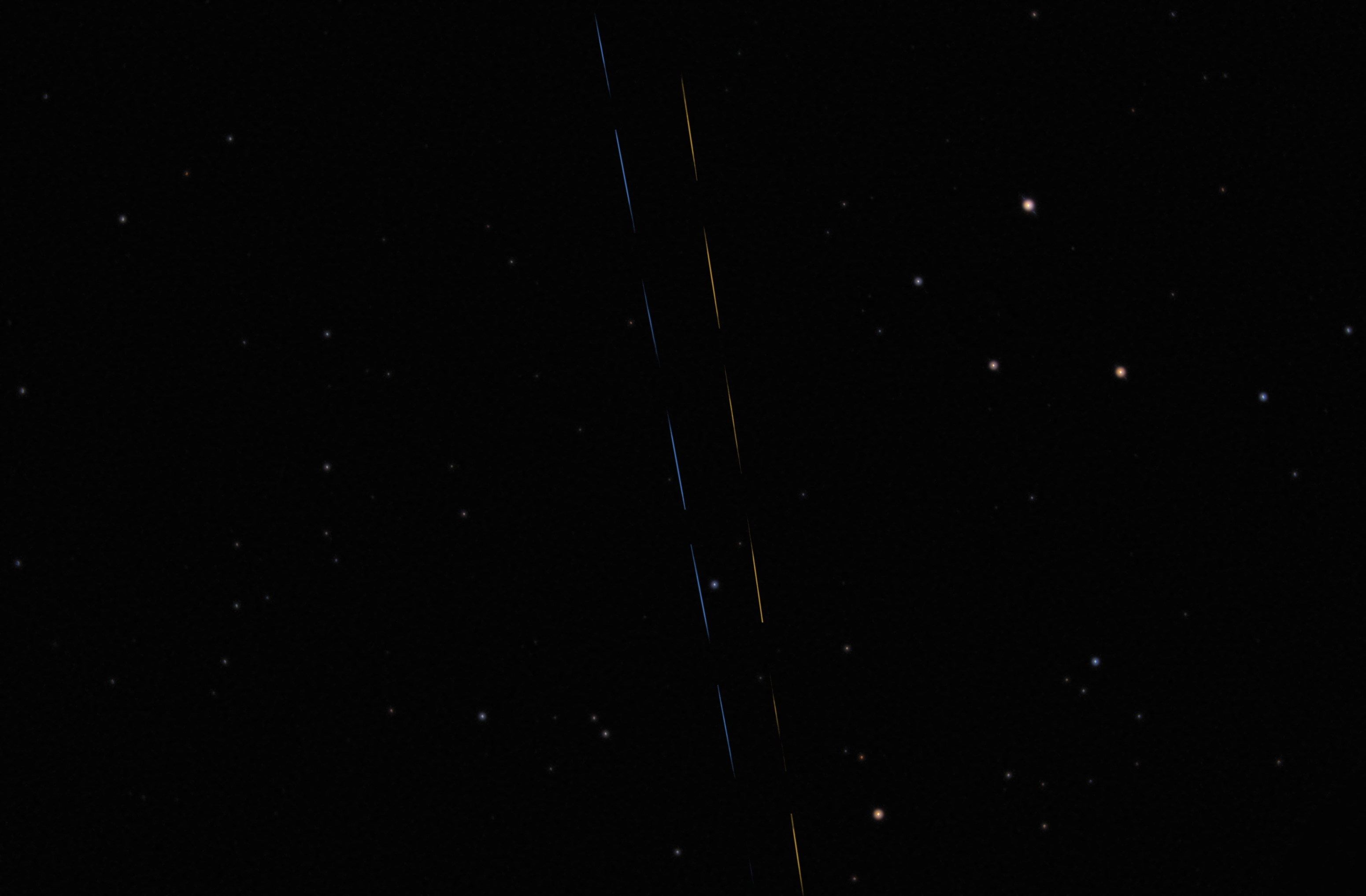
Photo: Christophe Mandy / NASA — The two ESCAPADE spacecraft streaked through the same part of the sky over Los Angeles two days apart: Blue in blue, Gold in gold. The image is a composite of five-second exposures.
Comments
Post a Comment