Every fall, scientist Deborah Giles starts her workday with the same question: where are the orcas? She tracks the Southern Resident killer whales, an endangered group that lives in the waters between Washington state and British Columbia. Only 76 of them are left, and their recovery is not going well, even after years of protection.
This November, Giles and her team tried a new kind of checkup in Puget Sound, just north of Seattle. They used a drone to catch droplets from a whale's breath and an 11-year-old rescue dog named Eba to sniff out floating whale droppings. The goal was simple: give as many of the 76 whales as possible a health check without ever touching them.
It sounds strange, but both tools work. The breath and the droppings carry clues about a whale's health that scientists cannot get any other way. Here is how the team does it, and what the samples are telling them.
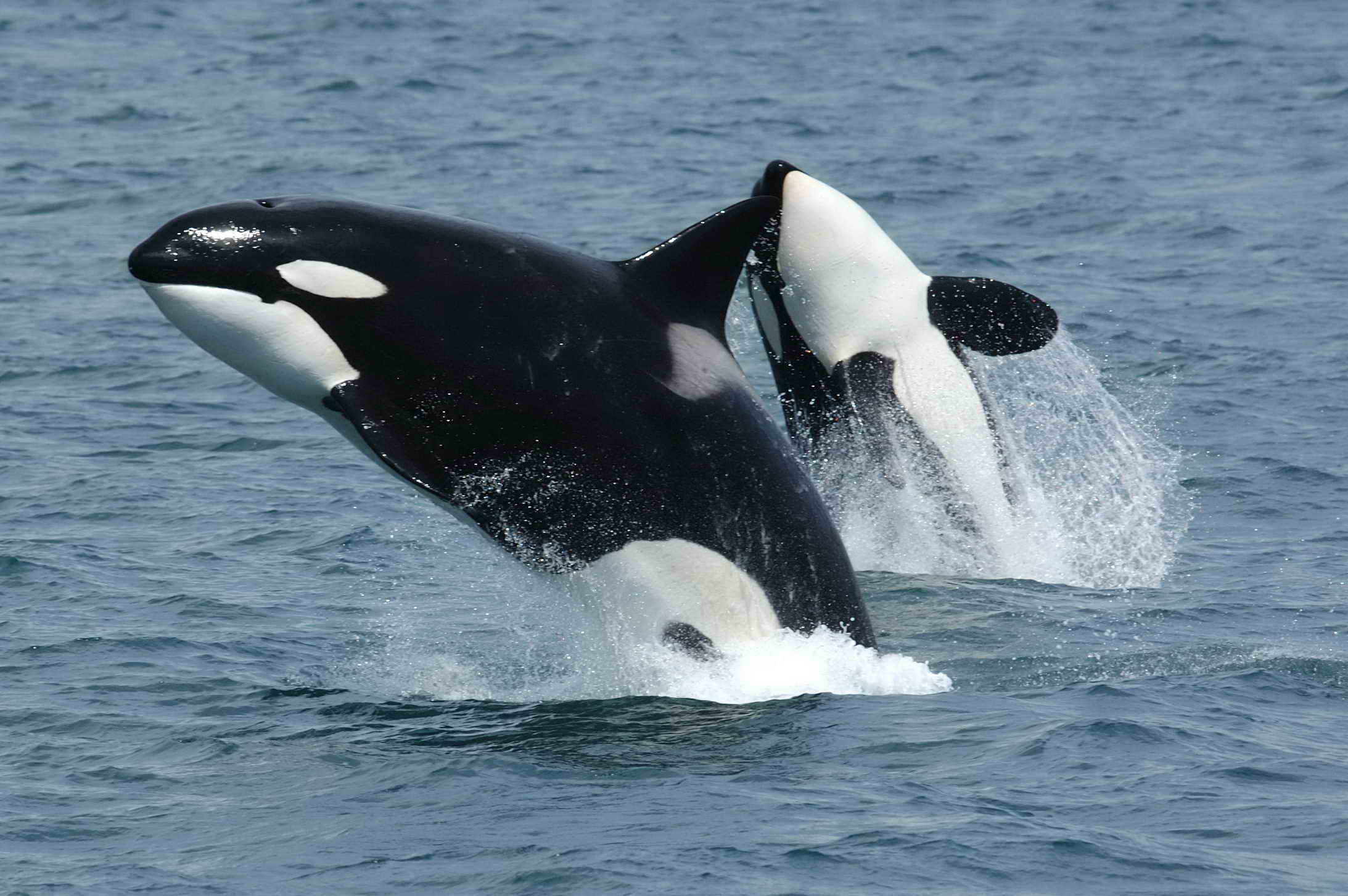
Photo: Robert Pittman / Wikimedia Commons (public domain) — Two killer whales breach in the open ocean. Only 76 Southern Resident killer whales are known to be alive today.
Why Do the Orcas Need a Health Check?
The Southern Residents are in trouble. They used to spend their summers reliably around the San Juan Islands, where Giles is based. Now they spend less time in the Salish Sea, the maze of inland waters between Washington state and British Columbia, because their food is harder to find. In the last five years, they have been hunting coho and chum salmon just north of Seattle during the fall, and that gives the team a short window to find them.
The bigger worry is what the samples have shown over the years. By comparing pregnancy hormones over time, researchers found that many females are having miscarriages. Calf deaths are also high. People have even seen mothers carrying their dead calves. That is why the team wants a health profile for every single whale.
How Does a Drone Catch a Whale's Breath?
James Sheppard, a drone pilot and senior scientist with the San Diego Zoo Wildlife Alliance, launches the drone from the bow of Giles' 22-foot boat. He hovers high first to find the whale, then drops to about a dozen feet above the water. When the whale surfaces, its spout spray rises 6 to 10 feet into the air and is about as wide as a basketball. The drone sweeps sideways through the falling droplets, and petri dishes and microscope slides mounted on it catch the drops.
The drone also carries video cameras and infrared sensors that record the whale's body temperature. The whales barely notice it. "To them, it's just a strange seagull that's been following them for a few seconds," Sheppard told the Associated Press. "The few times that they've actually noticed the drone, they'll just roll on their side, maybe look at it for a few seconds and then just keep on swimming."

Photo: Mike Baird / Wikimedia Commons (CC BY 2.0) — A killer whale breaches off Morro Bay, California. The research drone flies through the spray of a whale's spout to collect breath samples.
What Can a Dog's Nose Find in the Water?
After the drone, it is Eba's turn. The 11-year-old rescue dog stands at the bow of the boat and sniffs the air, held on a leash by Jim Rappold, Giles' husband and research partner. When she catches the scent of floating whale droppings, she paces and whines to tell the team. On the day the Associated Press watched, Eba picked up a scent, but her handlers could not find the droppings she smelled.
When the team does find a sample, it is worth the hunt. A single dropping can show a whale's DNA, what it ate recently, whether it is pregnant, how stressed it is and what pollutants it carries. Over the years, the team has collected hundreds of breath and dropping samples, and the San Diego Zoo Wildlife Alliance lab turns them into health profiles for individual whales.

Photo: NOAA Fisheries / Wikimedia Commons (public domain) — A Southern Resident killer whale breaches in the Salish Sea. The whales are an endangered population, with just 76 animals left.
What Does This Mean for the Orcas' Future?
The samples give scientists something they cannot get from watching the whales from shore: a look inside their bodies. Each whale's health profile helps the team understand why the population is struggling, whether it is food, stress, pollution or pregnancy loss. That knowledge shapes what gets protected next, from salmon runs to quiet water.
Here are a few key points to keep in mind:
- Only 76 Southern Resident killer whales remain, and their numbers are still falling despite years of legal protection.
- A whale's breath and droppings can reveal its DNA, diet, pregnancy, stress and pollution levels, all without touching the animal.
- The team's work depends on the whales coming close to shore in the fall to hunt salmon, a window that lasts only a few weeks each year.
The work is slow and the days are hard. November light is weak, the whales surface when they please, and sometimes the dog smells something the team never finds. But each sample is one more piece of the puzzle. For 76 whales, that puzzle is the difference between fading away and coming back. If a drone and a dog can help save a whale, what else might we learn by simply paying closer attention?
Comments
Post a Comment